MEASURE Wound Assessment
A practical, structured wound assessment course for nurses. Learn how to apply MEASURE confidently in clinical practice — with clearer documentation and safer decision-making. Length 2 hours, do in your own time from the comfort of your home!
Start Upskilling Now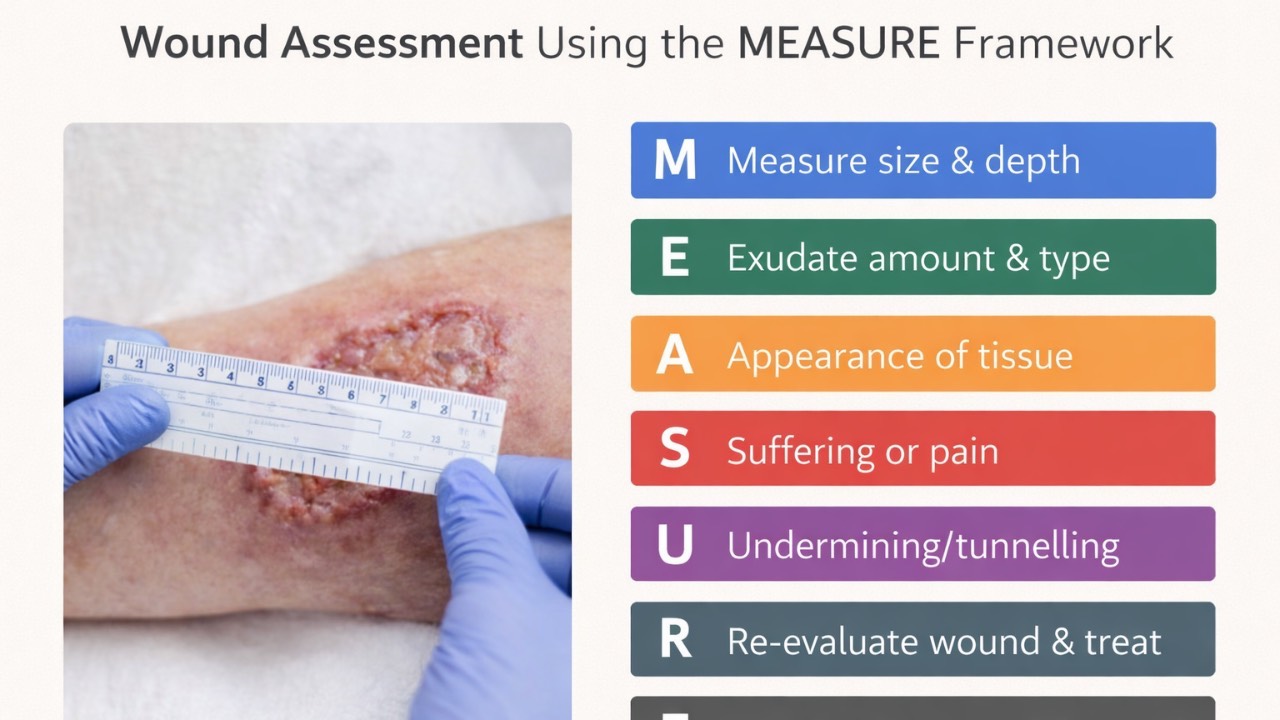
🩹 Mini Course: Wound Assessment Using the MEASURE Framework
-
Introduction to Wound Assessment
3 lessons- Welcome to the course
- Understanding the Importance of Wound Assessment
- Introduction to the MEASURE Framework
-
Applying the MEASURE Framework
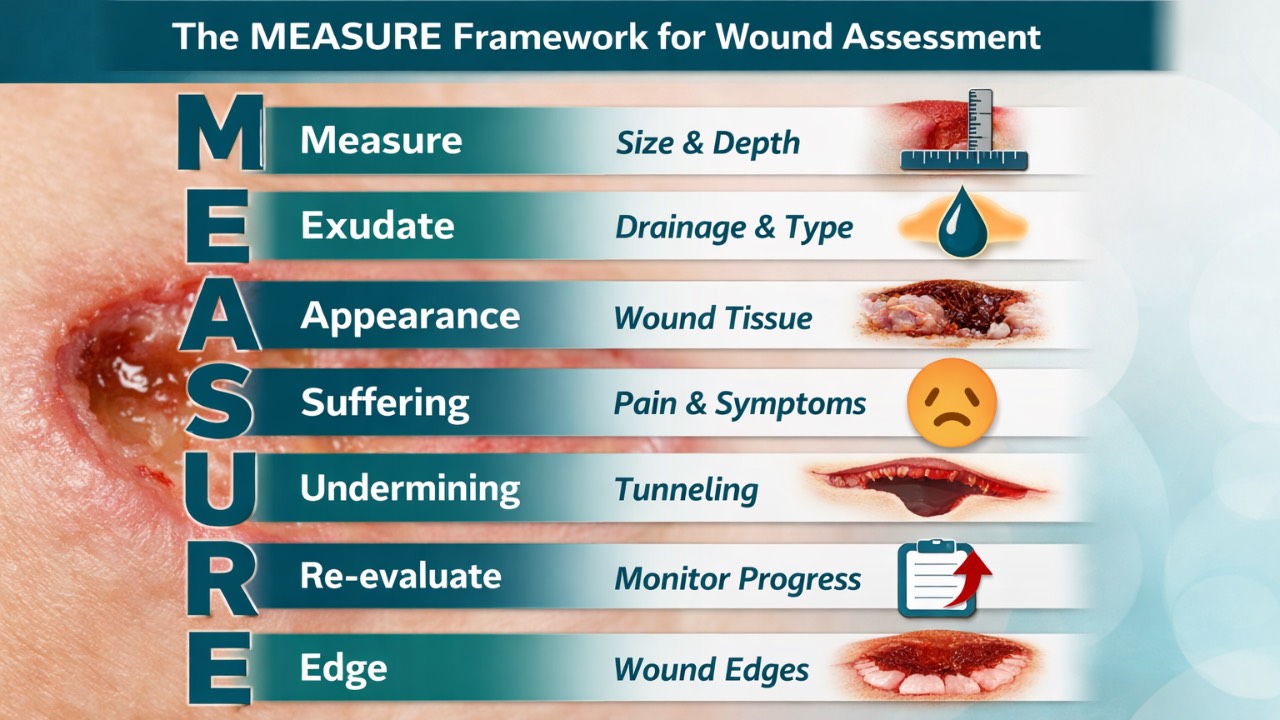
8 lessons- Appling the MEASURE Framework
- M for Measuring Wound Dimensions
- E for Exudate
- A for Appearance
- S is for Suffering
- U for Undermining
- R for Re-evaluate
- E for Edges
-
Recognising Red Flags
2 lessons- Recognising Wound Deterioration
- Clinical Reasoning in Wound Care: Using HEIDI to Guide Safe Decision-Making
-
Documenting and Communicating Wound Assessment
2 lessons- Communicating with the Healthcare Team
- Final Thoughts and take away
🩹 Mini Course: Wound Assessment Using the MEASURE Framework
🩹 Mini Course: Wound Assessment Using the MEASURE Framework Wound assessment is more than choosing the right dressing — it is structured clinical reasoning. This practical, evidence-informed mini course teaches nurses how to confidently assess wounds using the MEASURE framework — a systematic approach that improves accuracy, early detection of deterioration, and clinical decision-making. Inside this course, you will learn how to: 📏 Accurately measure wound size, depth, and undermining💧 Assess exudate type and volume objectively🎨 Identify tissue types and recognise concerning changes🔥 Interpret pain as meaningful clinical data🩹 Evaluate wound edges and surrounding skin🚩 Detect early signs of deterioration📝 Document clearly and communicate effectively🤝 Engage patients in shared wound care decisions This course is designed for nurses who want to move beyond task-based wound care and develop structured, defensible clinical assessment skills. By the end of this training, you will feel more confident identifying red flags, escalating concerns appropriately, and documenting your findings with clarity and precision. Structured thinking. Safer wound care.